My daddy used to say: if you want to make God laugh, make a plan.
God must have been laughing fit to burst today.
Sit for a spell. Let me tell you about today’s misadventures.
I was supposed to meet my friend Michael for lunch at noon today. Followed by tarot card readings in the French Quarter. Lunch was my idea. The tarot cards were Michael’s — he has been taking me to Bottom of the Cup for years.
Michael Flannigan is from Boston. He moved to New Orleans in the eighties and has been here ever since — longer now than he was ever a Bostonian — and yet he still pahks his cah in the yahd. Forty years. Some things don’t change.
We met at the food pantry. He had been volunteering there for years before I showed up, and he made me feel like I belonged from my first morning there. I knew I liked him right away.
He came with the man he loved. We are both widows now, I suppose. I am not entirely sure what you call a gay man with a dead husband. Miss Emily Post never addressed that in her big book of manners.
I left the house at eleven-thirty, which in most people’s worlds, would have been plenty of time. But God started laughing at my plan.
A school bus on Magazine Street planted itself right in front of my car at eleven-thirty-four, not knowing or perhaps not caring that I had a lunch date at noon.
In New Orleans, certain Catholic and private schools run half-day kindergarten programs, especially as the year winds down in May — loaded onto a bus around eleven-thirty and delivered home before noon. A perfectly sensible arrangement for a five-year-old. Far less sensible for anyone trying to get to a restaurant on Magazine Street. I know this because I have lived here my entire life, and because I can see them through the windows — small heads, backpacks roughly the same size as the children wearing them, four hours of school behind them and ready to be done with it. They were going to take exactly as long as they needed to get off that bus, and nobody was going to rush them.
The stop sign arm came out.
A small girl descended the steps with the measured confidence of someone who has nowhere to be and has never heard of anywhere to be. She had a lunchbox shaped like a unicorn. She stopped on the bottom step to adjust her backpack. She stepped onto the curb. She looked around at the neighborhood as though she was considering purchasing it.
The arm went in. The bus moved forward.
Thirty feet.
The arm came out again.
I was behind this bus for six blocks. The arm came out four times. I said something under my breath at block three that, in Créole, refers to a specific marine animal.
It was eleven-forty-three when the check engine light came on.
Now. The check engine light and I have a history, and that history got considerably worse the first time the light came on after Thax died, and I had nobody to pop the hood. He had those hands and that brain, and between them they understood what was wrong with a car before the car finished telling him. I did not need to know what the light meant. I had Thax. Now I have the light and a mechanic whose name Phillip passed along to me, whose opinion I have no way to verify, and who charges me what I can only describe as a small bounty to tell me things Thax would have told me for free in the driveway in five minutes.
The light itself declines to specify. It just comes on, orange and useless, causes severe panic, and reliably leaves less money in your checking account. I hate that shade of orange.
I thought of a specific marine mammal again. Verbalized it under my breath, and kept driving.
That is when the temperature gauge began moving toward H.
Not quickly. Just steadily. I was four blocks from the restaurant. I drove those four blocks with the windows down and the heat on full blast — that is what Thax told me to do once, years ago, if I ever found myself in an overheating car. It is one of only two pieces of car knowledge I have ever retained. The other involves making sure your headlights are off before you turn in for the night. I learned that one the hard way. More than once.
Thax had no interest in impressing anyone. He knew his heart, God knew his heart, and that was all that mattered to him. It never once occurred to him to worry about what he looked like arriving somewhere. So when he offered me this sage wisdom years ago, it never crossed his mind to mention what it does to a woman who was almost perfectly put together when she left the house. The heat through the vents. The wind through the windows. Both at once, going in opposite directions, and all of it hot.
Lord, I had already spent the money on a new radiator — in my head, anyway. I was positive I needed one. I refused to ruin the rest of my afternoon by thinking about it further. Well. I tried not to think about it further.
By the time the gauge stopped moving and I pulled into the parking lot, I had become my own personal environmental catastrophe.
I was seventeen minutes late and in no condition to be seen by anyone who knew me. Mama must have been looking down from heaven, having a stroke.
Michael was already at the table at Joey K’s with his cosmo and his reading glasses pushed up on his head. He took a visual inventory of me, all the way from my toes to the very top of my head. He gave me a look that asked why I was late and simultaneously answered it. And then he said the only Southern phrase he knew. He said: “Bless your heart.”
I sat down. I said: “I don’t want to talk about it yet. I need a glass of wine.” I know. I know. My doctor would disapprove. I ordered a glass of white zinfandel with a side of ice anyways.
The wine arrived. I took a sip. I said: “My angels must have taken a personal day today.”
Then I told him about the school bus and the check engine light and the temperature gauge. He listened the way he always listens — like there is nothing else happening anywhere in the world.
He said: “Did the gauge come back down?”
I said: “It did. A little. I’m sure it’s not serious. The car just got temperamental from all of the stopping and going.”
But, really, I was quite sure it was something very serious. Something that I wanted to ignore the rest of the afternoon.
He set down his cosmo. He said: “Eula, that car is almost as old as we are. You need to get it checked. Today. When’s the last time you had the radiator replaced?”
Michael is not one for ignorance is bliss. Never has been.
I said: “We have our tarot appointments after this. You know how hard it is to get in with Otis.”
He said “Eula” in the tone of voice he must have used when he was nagging his husband.
I said: “Ok, ok. I’ll call the mechanic right now and see if he can squeeze me in.” I paused. “After our tarot readings.”
He asked if I wanted my regular. I said yes. I stepped outside to call the mechanic. By the time I came back, Michael had ordered for both of us.
This is one of our regular places. I have an order here. Broccoli cheese soup, half a smoked turkey monte cristo, and a children’s brownie sundae — and before you say a word about the children’s brownie sundae — I am not cheap. No grown human could possibly finish an adult brownie sundae by herself. Have you seen how large they are?
The server came back.
She was apologetic about it, which I appreciated. She said: “I’m so sorry — we’re out of the broccoli cheese soup today. Can I bring you the crab and corn bisque instead?”
I looked at her with the same disappointment a child feels on Christmas morning when they expected a toy car and got socks.
I said, softly: “The crab and corn bisque?”
She said: “Yes, ma’am. It’s very good.”
Now. Ever since I watched The Little Mermaid with my granddaughter Rose when she was three years old, I have not been able to eat crab. There is a creature in that movie — small, red, sings reggae, tried to get the handsome prince to kiss the mermaid — and the moment I see crab on a plate I think of him, and I just can’t do it. I can’t. I realize that this might reflect poorly on me. I am a seventy-eight-year-old woman from New Orleans who has eaten every creature that has ever come out of the Gulf of Mexico, and I have been ruined by a cartoon crab. I said no thank you. And ordered another glass of wine.
I ran the kitchen at our jazz club for thirty years. I know how to make broccoli cheese soup. I had my heart set on this one. I was very, very disappointed.
The monte cristo was fine. The server brought the crab and corn bisque anyway — in case you’d like to try it, she said. I had no intentions of eating the creature that saved the mermaid. Michael loved it. The afternoon was, for a few minutes, going in a reasonable direction.
It was when I reached up to tuck my hair back that I noticed.
One earring was missing. These were not earrings from the Woolworth’s jewelry counter. These were Mémère’s earrings — the ones she gave me the day I graduated high school. The ones her grandmother gave her when she left France for America.
I retraced the morning in my head. Getting dressed. The car. The walk from where I parked to the restaurant. The table. The restroom. Stepping outside to call the mechanic. Any one of those places. Any moment when I was not paying attention.
I told Michael.
He put down his cosmo. He said: “It’s got to be somewhere around here. We’ll find it.”
We did not find it. We retraced every step — the parking lot, the sidewalk, back inside the restaurant. We looked at every inch of ground. Nothing.
Michael asked if I had checked my bra.
I had not checked my bra. I checked it then. Nothing.
I sat down on a bench on Magazine Street. If that earring was gone, a piece of Mémère was gone with it.
We went to Bottom of the Cup on Chartres Street. I love that place. It’s been there since the 1920s and it looks like it — old brick walls, low light, curtained booths in the back. It smells like tea and candle wax. When you walk in off the street the whole French Quarter goes quiet. I don’t know how it does that. It just does.
Otis has been reading there longer than I can remember, and I don’t think he’s ever once been surprised by anything anyone has brought through that door.
I want to be clear: I was the one who insisted we keep these appointments. And I will tell you that by the time we walked through that door, I was not in any frame of mind for tarot cards.
Otis read for Michael first. I do not know what he told him because I was staring at the table cataloguing, for the fourth or fifth time, everywhere I might have lost that earring.
When he read for me, he turned over a card and looked at it for a moment and said: You have been looking for something today that is not where you’ve searched.
I looked at him. It was at that moment I remembered I was still wearing one earring. I wondered, briefly, whether Otis needed the cards at all.
He said: It is much closer to home than you realize.
I said: “I certainly hope so” — and for the first time since shortly after I left the house, I felt a glimmer of hope.
After our readings, I took the car to the mechanic. A promise is a promise, even one made under duress at a restaurant with no broccoli cheese soup.
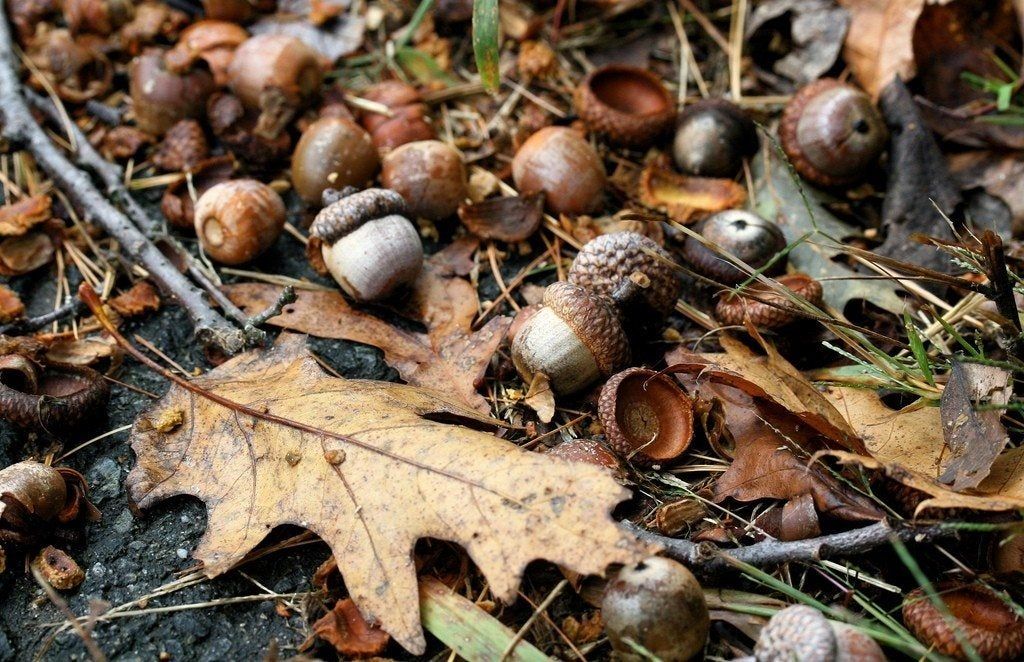
The mechanic came out to the waiting room after about twenty minutes with the look of a man who has seen this before and knows you haven’t. He had his phone in his hand. He showed me a photograph. He said: “Miss Eula, you’ve got acorns stored in your engine.”
I said: “Huh?”
He said: “A squirrel’s been using your engine compartment as a pantry. Packed it full of acorns. Blocked the airflow something considerable.”
I stood there for a moment, relieved that I didn’t need a new radiator.
He said: “Happens more often than you’d think. They find a dry, dark, compact place and get to hoarding.”
I said: “Makes sense” — still amazed at how lucky I was that I didn’t need a new radiator.
It took him forty-five minutes to clear it out. I asked him to save the acorns. He looked at me. I said: “Just put them in a bag, please.” The car was fine. The squirrel must have been out on his rounds when I started the car this morning. He was nowhere to be found in my engine.
Now, I know I’m not supposed to do what I did next. Just like I wasn’t supposed to order not one, but two glasses of wine. But I had been stuck behind a school bus and my car had been running hot on account of a squirrel’s pantry, and they were out of the broccoli cheese soup, and I had spent forty minutes on a sidewalk looking for Mémère’s earring, and there are days when a woman knows more about her needs than her doctor does.
I had a friend, years ago, who used to say: Child, there ain’t a thing on this earth that will kill you, as long as you enjoy it in moderation. She said it with such absolute conviction. She was right then. She’s still right. One cigarette is moderation. The rest of the pack was always going to Yvette.
On the way home, I stopped and bought a pack of Lucky Strikes. I took one out and left it on the seat for later. I drove to Yvette’s. Yvette is ninety-seven years old, still lives alone, still drives during daylight hours, still does exactly as she pleases, and was not home. I went up to the porch and left the pack on the little table she keeps out there. I did not leave a note. I have never needed to leave Yvette a note in my life. She will know who they are from.
I drove home. One cigarette. I was done with today.
I came through the front door. Gladys raised her head from the couch, assessed the situation, decided it did not require her full attention, and went back to sleep. I went upstairs. I walked into the bathroom. Something caught the light. Mémère’s earring was on my vanity.
It had been on my vanity all day. I had been running just a tad late — that happens sometimes with me and appointments earlier in the day — and I had put in the right earring and then gotten distracted by something. I remember exactly what that something was. A phone call. From a man whose words said he was Jeremy from Los Angeles and would I be interested in learning about reverse mortgages. His voice, however, told me he was really Arjun from Mumbai. In the forty-five seconds it took me to get him off the phone, I had forgotten about the second earring. I walked out the door with one earring in and one sitting on the vanity right where I left it.
I sat down on the edge of the bed and laughed a little.
I sat there with the earring in my hand and I thought about Mémère. Lord, it is something, to have a little piece of Mémère right there in my hand. A piece of jewelry, a dish, a smell that brings them back. I am grateful for those things. I hold onto them.
But I will tell you what I am more grateful for. I still remember her. I still remember her vividly. I remember the afternoons we spent in her kitchen on her side of the duplex, her teaching me her recipes. I remember her teaching me the books upstairs at the apothecary. I remember how happy she was at my wedding. I remember the first time she held Celeste. And I remember the exact moment she began to forget who I was. And I remember — how that felt. I have all of that, and I have had it for most of my life. Thank God. It’s not going anywhere.
I know people fifteen years younger than me who are in nursing homes and can’t remember they have children. I think about that once in a while. A lost earring is not a lost memory. I understand the difference.
I called Michael. He answered on the second ring.
I said: “The earring was on my vanity.”
There was a pause.
He said: “All that worry for nothing.”
I said: “I forgot to put it in. Jeremy from Mumbai called about a second mortgage and I forgot. I just walked out the door.”
He said: “Eula.”
I said: “What?”
He said: “And the car?”
I said: “It’s fine. At least for the foreseeable future. A squirrel was hoarding its booty in my engine.”
There was a long pause.
He said: “A squirrel.”
There was a pause.
He said: “All that worry for nothing.”
I said: “The car is fine. The mechanic said it happens more often than you’d think.”
He was quiet for a moment.
He said: “He knew.”
I said: “He could have guessed — I was still wearing one earring. But I think he knew. Yes.”
Gladys found her way up the stairs and appeared in the doorway with the expression she gets when she has to go and can’t hold it much longer. Gladys doesn’t give much warning. We said our goodbyes. We would see each other next Monday at the pantry. I told Michael I had to go. The dog was not going to wait.
Now, cher, I am out on the porch smoking my Lucky Strike and sipping a little bourbon from Thax’s last bottle — the one I haven’t touched since last year — with forty-seven acorns in a paper bag beside my chair.
And this is what I know.
The earring was on my vanity the whole time. The car had forty-seven acorns in it — and if I had not driven today, Lord knows how many more would have been in there by August, waiting for the worst possible day. There will be soup next time. And if there isn’t, I’ll make it myself.
The day was not what it looked like from the car, or the restaurant, or the sidewalk. You get home and the bad radiator is acorns, the soup is something you can make better yourself, and the earring is right where you forgot it. You just couldn’t see any of that from your bench on Magazine Street, where you were feeling oh so sorry for yourself.
I spent most of today worried about things that were fine. Things I had no control over anyway. Lord. The energy we spend.
But, I’ll be blunt. Today was still one phoqueing day.
Hold on just a minute before you decide what the day means, cher. You are not as far into the story as you think.
You come back any time, cher. I’ll be here waiting.