Walt Disney came on my television last night, and the first thing in my head was his cough. The cough he tried so hard to hide from the world.
Gladys had taken her corner of the sofa the way she does every evening, just hopped up there and claimed it like she owned the place. I was flipping through the channels after dinner with the clicker — the one Thax lost the back to five years ago, that still has duct tape over the batteries — waiting for something to make me stop. How those batteries are still good after five years, I couldn't tell you. I guess it's just one of those mysteries of the universe.
He made me stop.
It was a documentary — the story of his life — and I caught only the tail end of it. But the tail end happened to be the last footage of him ever filmed. I didn’t know that when I stopped on it. In that footage, he’s standing in a room covered floor to ceiling in maps and concept art, surrounded by models, laying out the city he meant to build down in Florida — the whole future of his great big beautiful tomorrow spread on the walls around him. They filmed it in October of 1966. He had about seven weeks to live, and he hadn’t the faintest notion that he was on his way out. But then, none of us ever really know how much time we have left. That man looked sick, standing there in that room. He had lost weight — you could see it in his face, and in the way his collar stood off his neck. His color wasn’t right. And he was tired. Not the kind of tired a good night’s sleep takes care of — the other kind, the kind that gets down into a person’s eyes and stays there. But he was composed. He was full of plans. He was so optimistic. He stood there pointing at a tomorrow he fully meant to be standing in.
But as sick as he looked, there was not one cough in that footage. Not a single one. And you won't find a cough in any official footage of him. The man went through three packs a day almost his entire life, and he kept it out of sight of the public. He would not pose for a photograph with a cigarette in his hand. He would not walk through Disneyland with one — not where a child might see. Oh, he smoked, all right — freely, up in that little apartment he kept over the fire station on Main Street, with the door shut. He just would not do it where the children who loved him could see him. So that is all the footage gives you — Uncle Walt. The strong voice, the kind face, the big plans. It doesn’t show you what those cigarettes had been doing to him the whole time.
Three packs a day killed him. Just turned sixty-five. Ten days past his birthday.
Now, I’m in no place to judge. I still sneak one out on the porch now and again. What my doctor doesn’t know won’t kill me. So I’m not preaching at anybody. I only mean that it took him — and it doesn’t take everybody. Just look at my Aunt Yvette: ninety-seven years old, smoking since before I was born, and she will bury us all. There is no telling, going in, who ends up Walt and who ends up Yvette.
Whatever came on after the documentary, I let it play in the background. To be honest with you, I didn’t take in a single word of it.
I kept thinking about Mardi Gras morning, 1959.
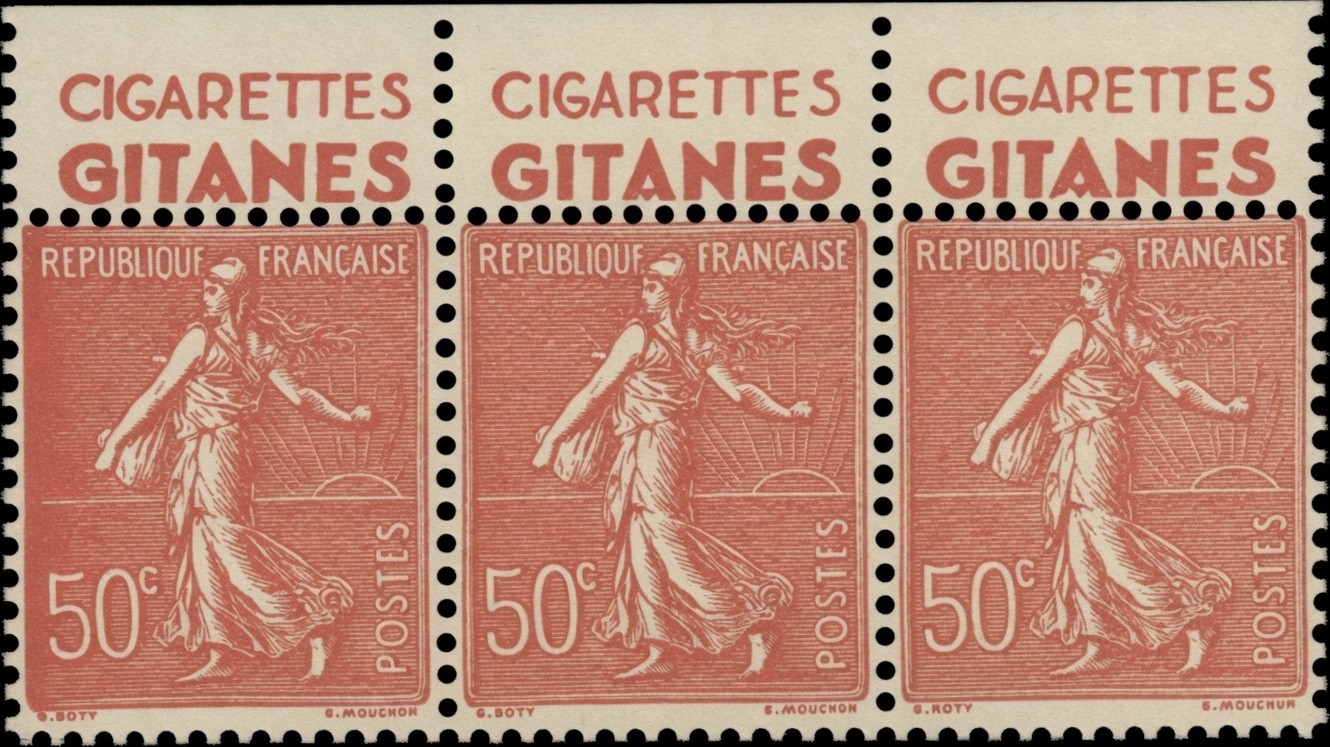
The apothecary on Grand Route St. John, just off Esplanade, belonged to both my grandparents — Pépère’s and Mémère’s in equal measure. Pépère stood the counter, dispensing some medicine — and a lot more old-world remedies — listening to troubles, and stocking provisions imported from France that were hard to come by anywhere else in town. Gitanes, for instance. French cigarettes. Black, unfiltered tobacco. The apothecary was one of the only stores in New Orleans that carried them, and Frenchmen came from across the parish for them. Mémère kept the books and made at least half of what stood on those shelves with her own two hands — the salves, the soaps, the toilet waters, the little tins of pastilles, and the candies the neighborhood children came tearing in for the minute school let out, buying them by the sticky fistful.
I was ten years old that morning. I want you to hold on to that, because the woman telling you this knows who that man was, and the girl I’m telling you about was only in reach of figuring it out.
It was warm for February — near eighty degrees, the way this city sometimes forgets what month it is. The sky had been leaking all morning, a little here, a little there, never enough to call rain. The parades never came near us; they rolled across town on the wide avenues, and the whole neighborhood emptied out toward them. So Mardi Gras morning was about the quietest that street ever got. The door stood propped open to all that hush. Now and then a little band in costume would pass on their way to the bus, and far off you could just make out the brass and the crowds of a party happening somewhere else. Somebody down the block was frying dough — you could smell it from any spot on the street.
Daddy was on the river, working his way back down the Mississippi — due home that very night. Gone days at a stretch, the way riverboat captains are.
Mama was at confession.
Now — my mother did not go to confession on a Tuesday as a general habit. Her day to settle accounts with God was Saturday. But this was an emergency of the highest order. The night before, she had burned her hand pulling the king cake from the oven, and she took the Lord’s name in vain. Loudly. In her perfect Parisian French. In a voice that carried through the kitchen, through the sitting room, out the front door, and I am fairly certain across the street onto the LaBarres’ porch. I believe it is what killed Mrs. LaBarre’s potted camellias. A thing this grave could not possibly wait until Saturday — her immortal soul was at stake — so she telephoned Father Benedict first thing the next morning, before she had so much as a cup of coffee in her.
I heard the tail end of that call before I left the house, her voice gone precise and penitent, and meaning every word of it. The whole city was pointed toward the parades. Adrielle Châtelain was pointed toward St. Augustine. She put Sophie in my care and went.
I walked Sophie the three blocks to the apothecary. We had done it a hundred times. She held my hand the whole way and named everything she liked, which was basically everything.
The minute we came through the door, we were already making for the stairs. Mémère was up over the shop with the account books — Tuesday was her day for the accounts — and there was no version of walking into that apothecary where Sophie did not go straight up to her first. Sophie bounded up those stairs three steps at a time, calling for her the whole way, and I came up behind.
Up over the shop was a little apartment — a kitchen, a sitting room, a bath, and one small bedroom. It was the first place Pépère and Mémère ever lived in America, back when they were young and newly over from France, before they had saved the money to buy the duplex. It was still an apartment, really. Some of the rooms had just been repurposed. The sitting room and the bedroom belonged to the shop now — whatever the storeroom downstairs could no longer hold had ended up here instead: demijohns of castor oil and witch hazel, sacks of Epsom salts, boxes of mustard plasters, stacked clear to the picture rails and smelling of cardboard and camphor. But the kitchen. The kitchen Mémère kept for herself. She kept it exactly the same. She just used it as her office. The stove and the refrigerator still stood against the wall where they always had, and she did her figuring at the old kitchen table, the ledgers spread out where the supper plates once went, the percolator perking away on the back burner, the window over the sink letting the morning in across the oilcloth. The room smelled of her coffee — and just then, of the beignet at her elbow on its square of waxed paper. Mémère was far too neat to wear her sugar; the only sign she’d had any was one stray fleck on her upper lip she had no idea was there. She set down her pencil and gave Sophie a big hug, and then me. She let Sophie tell the whole long story of our three-block walk, which to Sophie was a grand adventure. Then she broke off a corner of the beignet for each of us and sent us back down — gently; she did everything gently — so she could get back to her columns.
By the time we headed down, Pépère already had our drinks waiting on the counter — a strawberry cream soda for Sophie, a root beer float for me. He had started fixing them the moment he heard our feet coming back down the stairs; he knew what each of us liked without having to ask. He handed them to us with the smile that said he was so happy we were spending the day with him and Mémère. Sophie climbed onto her stool by the window and settled in to watch the street like it was a parade arranged for her personal entertainment. There was not much out there to look at — a strip of banquette, a wedge of sky, whoever happened past on their way down to the boulevard. Sophie watched it like the greatest show on earth. She watched most things like that. In pure wonderment.
The world had pity for Sophie. Sophie never did. She was just Sophie — happy, cheerful, heart-overflowing-with-love Sophie. She always always was. And she still is.
Me, I had nothing to do once I finished my float. And there is no creature on God’s earth more bored than a ten-year-old underfoot in a grown person’s shop. I had it bad that morning. The place smelled the way it always did — eucalyptus and pipe tobacco and furniture wax and a pinch of thyme. Everything was mahogany. The long counter was worn pale along the front edge, from forty years of folks leaning on it to tell Pépère their troubles. Behind it stood the tall cabinets and the high shelves of amber bottles I’d stare up at until I went dizzy. The windows ran floor to ceiling, all leaded glass. Five stained-glass pendant lights hung over the counter — Tiffanies, though I didn’t know to call them that yet — and when the ceiling fan turned, they threw colored light across the floor, green and gold and rose. One of them hangs over my porch now.
And under all of it, turned down low behind the counter, the radio. Pépère kept it on WWL most every day — a little Dixieland, a clarinet and a cornet working through something easy — and on a day like this one the station gave itself over entirely to the city’s own music. It drifted through the shop all morning, soft as the fan.
But a shop only holds a bored child for so long, and Pépère could feel that boredom coming off of me. He handed me a pad and a pen and set me to counting stock — how many tins of this, how many bottles of that, all in my best hand. He gave me that job whenever I got underfoot — and he used what I brought him, checking my counts over first, quietly, before they went into the books. It was years before I understood he had been teaching me a skill the whole time, a little at a time, without ever once calling it a lesson. There is no feeling in the world like being trusted with real work when you are ten. So I carried my pad to the back and started counting. That back room had been the speakeasy once, in Pépère’s younger and less lawful days — the long mahogany bar still bolted to the wall, holding crates of stock now instead of glasses, its brass foot-rail gone dull and green. I counted boxes from Paris down the length of it.
That’s when I heard the man come through the open door up front.
And then a cough. Not a sick man’s cough, exactly — more the cough of a man who had been clearing his throat the same particular way for so many years he no longer heard himself do it. Two short barks, a pause, then one more.
Pépère spoke first — the unhurried greeting of a good shopkeeper welcoming a patron. Then a man’s voice. American. And familiar — I knew it, I knew I knew it, and I could not for the life of me say from where.
Sophie said hello. Right away, the way she always did — and not just to whoever came through that door. Everybody, everywhere. The mailman, the nuns, a stranger waiting on the corner. No pause, no sizing the person up. Just hello — direct and warm and overflowing with genuine joy, like whoever it was had made her whole day by turning up. To Sophie, they generally had.
The man said: Well, hello there, young lady.
I stood very still in the back room. I was reaching for that voice and couldn’t quite close my hand around it.
He asked Pépère for a pack of Gitanes. Said he’d heard this was the store to find them in New Orleans. And it was — Pépère always had them. I heard the pack come down off the shelf and land on the counter.
Then Pépère asked him where he was from. California, the man said — though he’d grown up in Missouri. Then the man asked where Pépère was from, because the accent made it obvious, after two words, that he wasn’t American by birth. France, Pépère said. Paris.
The man said he had been to France once. 1918. The Red Cross. He was barely more than a boy.
My grandfather had been in that war too — most every Frenchman his age had. He’d known it from the other side, though: a soldier down in the trenches, not a boy from Missouri with a Red Cross armband. But it was the same war, and the same mud. And now here the two of them stood, forty-one years later, talking it over across the counter on a Tuesday morning.
They talked a few minutes — about France, about that year, about a war that was history to everybody now but the men who had lived it.
Then the cough came again.
I heard Pépère’s voice shift into the tone he used when he was tending to somebody, and then the soft knock of a tin set down on the counter. Mémère’s pastilles — little throat lozenges, fig and thyme, a recipe nobody ever wrote down. She made them over in her kitchen in the duplex, in small batches — and not only the pastilles, but all her remedies, her soaps, her toilet waters. When the sugar was boiling, none of us children were allowed near the pots — not Marc, not Sophie, not me. Mémère lived in fear one of us would get burned. Pépère kept a tin of them by the register and gave them out, one at a time, to anyone who came in hurting — never charged a cent for those. The tins he sold.
The man said: These are like candy.
Then he started coughing again — a short, hard fit into his fist.
Pépère waited it out. Then he got to talking, the way he did whenever a customer put him in mind of the old country. My grandmother, he said. She knew an Englishwoman, when I was a small boy in France. Mon Dieu. This woman, she was close to a hundred years old — she must be long dead now, of course. She carried an umbrella with a bird’s head carved into the handle. A cockatoo, I think. I have never once forgotten it. A little pause, the kind he took for effect. And she used to say — a pinch of sugar hides the bitter.
Then the man said: She sounds like a very wise hundred-year-old woman. I’ll have to remember that. It might come in handy one day.
And he chuckled at that — and the chuckle tipped straight into the cough. It ran on a while. Then it passed, and he cleared his throat and was himself again.
Then I heard him ask Pépère for a pencil and a pad of paper. A moment later, I heard the scratch of that pencil on that pad.
Then, to Sophie: Young lady, this is a small token of appreciation for the kind hospitality. I need to be on my way now. Thank you, both of you.
Sophie made the sound she made when something delighted her, which was often, and which is one of the great gifts of knowing her.
I set aside my inventory for a moment and walked to the front.
By the time I came through the doorway he was already down at the corner, stepping out onto Esplanade.
Salt-and-pepper hair. A certain way of carrying himself, moving forward. Already going.
And crossing at the corner the other way, out on Esplanade, an old Creole woman I had seen around the neighborhood but did not yet know — a second-line umbrella in one hand, a leash in the other. Whatever the sky had been leaking all morning must have fallen right through that parasol of hers — and not a drop of it appeared to have touched her. She was dry as a bone. On the leash was a small alligator, walking along like a dog with nowhere important to be. The two of them crossed paths right there at the corner — and for just a moment the man slowed and lifted his hat to her, and the old woman answered with a single nod, before the two of them went on their separate ways down the boulevard.
In New Orleans on Mardi Gras, this was not remarkable. This was just another Tuesday.
I stood in the doorway and watched the two of them disappear in opposite directions.
Sophie was holding a piece of paper.
On it was a mouse. Round ears, white gloves, trademark smile. Not the kind of mouse you’d set a trap for in your kitchen — a happy mouse, the kind you’d want for a friend, the kind you’d hand over all your cheese to. Drawn fast but drawn well, by somebody who had drawn it ten thousand times, who could probably draw it in the dark.
And Sophie knew that mouse. Every child alive knew that mouse. She held it the way she held things she loved — both hands, careful — because the most famous mouse in the world had been drawn just for her, by a nice man with a kind face who had said well, hello there, young lady to her like she was somebody worth saying hello to.
Which she was. She always, always was.
Pépère was already straightening the counter.
I did not know who he was that morning. I was ten years old and I knew a voice I couldn’t place and a man who had been gentle with my sister, and that was the whole of it.
The next morning, Daddy was out on the porch smoking his pipe — Mama didn’t let him smoke in the house. He’d left the Times-Picayune on the kitchen table, and I went through it looking for the funnies. That’s when I saw it. A small item, with a photograph: Walt Disney had been in the city for Mardi Gras, come to see the parades.
I looked at that photograph a long time.
The mustache. The way he stood. The man from California who grew up in Missouri.
And that was when the voice fell into place. I had been hearing it for years — Friday nights, right out of our television set, that same easy voice telling us what was coming on next. Walt Disney himself. That was who had said Well, hello there, young lady to Sophie. I’d known that voice all along. I just hadn’t had a name to hang on it. Now I did. The man who made that mouse. The mouse on the lunchboxes and the movie screens and the sides of buildings, the mouse a whole generation of children had loved before they could so much as read. That man had walked into my grandfather’s shop on a warm Mardi Gras morning, bought a pack of Gitanes, talked about a war with an old Frenchman who had been in it too, taken a fig pastille for that cough of his —
— and drawn a mouse for my sister, who said hello to everyone.
Sophie carried that drawing home and showed Mama and told her the whole story of the nice man, and Mama listened the way she always listened to Sophie — her full attention, nothing held back, nothing checking the clock. Mama had just come home from confession, relieved she wasn’t going to burn in hell for all eternity — and maybe a little longer. It was a pretty big sin, after all. She was in a fine mood for a story, and it was a good afternoon.
A week later, Sophie brought the drawing back to the apothecary.
She held it out to Pépère with both hands, the way she’d held it the whole time — like she was only handing it back to where it belonged.
Pépère, she said. You take it. He was your friend.
He was your friend. As though the two of them had known each other years. As though a man who spent four minutes in a shop and a man who gave him a lozenge had built something between them worth keeping. And the thing is — Sophie was not wrong. She was never wrong about that. She saw a thing the rest of us were too clever to see.
Pépère looked at the drawing a moment. He thanked her. He hugged her. And he kept it.
Here is the part I have never gotten over. He had no idea who that man was. The name Walt Disney meant nothing to him — he was an old Frenchman with no use for cartoons, and to the end of his days that morning’s visitor was only a kind soul with a bad cough who had bought a pack of Gitanes. I never told him otherwise, and I don’t think it would have changed a thing if I had. He didn’t keep the drawing for who drew it. He kept it because Sophie had handed it to him and called the man his friend, and to Pépère that was worth more than any name.
Years went by. Many years.
When Pépère finally gave up the shop, Thax and I helped clear out the back room — just the two of us and the dust, going through the old things, deciding what was worth carrying out and what was not.
Thax found it, tucked into an old scrapbook in the back. He brought it across the room to me, open to the page. He knew before I did that I would want to be sitting down.
There it was. The mouse. Round ears, white gloves, trademark smile. Kept all those years, careful as anything, where it would not be bent or faded. And down in the corner, in pencil — a signature. I must have held that drawing five or six times the week Sophie had it, and not one of us ever thought to look at the corner. Who looks at the corner of a child’s drawing? Walt Disney. In his own hand.
I sat down with it in my lap. I don’t know how long. All that time Pépère had kept it, and he had never once known what it truly was. He had not needed to. He had kept it for Sophie, and that had always been enough.
Thax sat down beside me. He didn’t say a word, and he didn’t try to. He just sat there while I went where I needed to go in my memories, and stayed until I came back.
Sometimes that is the whole of what a person needs. Not the right words. Just someone in the chair beside yours who isn’t going anywhere.
That sketch — a signed Walt Disney, no less — would be worth a great deal of money today. I know that. Celeste has reminded me on several occasions. Some auction house in New York would put a number on it I would not believe.
Sophie doesn’t know that. She wouldn’t care if she did. And Pépère never knew it either. To him, that drawing was not worth a dime and priceless at the same time — worth nothing, because he never knew whose hand had drawn it; worth everything, because Sophie had put it in his hands and called a stranger his friend.
I’ve been trying to find the tidy thing to say about all this, and it keeps getting away from me.
The easy version goes: be kind to strangers, you never know who they might turn out to be. And that’s fine, I suppose, but it isn’t right. It isn’t what happened. That version makes it sound like Sophie said hello to that man because some part of her sensed he was somebody. She didn’t sense anything of the kind. She didn’t know, and it wouldn’t have mattered to her if she had. She’d have said the very same hello to the iceman, to the boy who delivered the papers, to a stray dog.
That’s the part I can’t make tidy. The rest of us go through our whole lives sorting — is this one worth my hello, is this one worth my trouble — and we call it good judgment, and maybe some of it is. But Sophie has never sorted anybody. She got that mouse from the man who made the mouse, and a week later she gave it away. The paper was never the gift to her — the kindness was, and the kindness was already hers to keep.
I used to think Sophie was happy in spite of how she was. I’m an old woman now, and I’ve come to see it otherwise. Sophie does not know how she is. The world decided long ago that she’s somehow less than the rest of us, and that verdict has never once reached her. And it never will.
It took me the better part of my life to understand she had it right all along. Sophie still says hello first — to her, there’s no such thing as a nobody.
Gladys was still asleep in her corner. The television was still going, some show I’d lost the thread of entirely.
I let her sleep.
Come back soon, cher.