Gladys is lying next to me on the porch right now. She’s got some Boston Terrier in her, though what else the Lord put in there we never did determine. A little of this, a little of that, and heavens, there is a lot of lazy in that dog. I have had my suspicions she is more sloth than anything else. As we speak, she is pressed against my ankle like a small warm anchor, which is her way of saying she’s decided I’m hers for the afternoon. That is about the full extent of her ambition.
It was spring of 2020. If you were alive and conscious during that stretch of time, you know what the world felt like. New Orleans had gone quiet in a way I had never heard in seventy-some years of living here. No second lines. No Jazz Fest. No strangers leaning into each other on Frenchmen Street while somebody played something beautiful nearby. Just the ceiling fan turning overhead and the sound a city makes when it shuts itself in to hide from something it fears.
We had lost Baxton a few months before.
He was nine — a big black mix of lab and husky, all loyalty and motion, the kind of dog who was absolutely certain the squirrels on our block were a threat to this family and took it upon himself to handle it. He slept between us every night of his life. When he was a puppy, that was adorable. When he grew into his body, we had a decision to make. We bought a larger bed. That is the kind of negotiation a dog will win every time once he has stolen your heart. And he had stolen ours the moment we laid eyes on him.
He had a greeting he saved just for Thax — the moment that door opened, Baxton became a completely different creature. Ears back, tail going, making a sound somewhere between a bark and a song, like he had been waiting all day to tell Thax something important and could finally, finally say it. Every single time. Whether Thax had been gone twenty minutes or all day. Every. Single. Time.
With me it was a tiny bit different. Wherever I was in the house, he found me. He would walk in, turn around twice, and lie down so close I could feel the warm breath escape from his nose. He didn’t need anything. He just needed to know where I was. I have thought about that a lot since we lost him — the gift of a creature who simply wants to be near you. No reason. No agenda. Just near, because they love you.
I was the one holding the leash the afternoon he died.
He saw the squirrel. He lunged — doing his job, keeping us safe, the way he always did — and the clasp let go, just gave way, clean and quiet, like it had decided it was done. And then he was in the street. The car didn’t have time to stop. There was blood on that windshield. There was one sound from him — one single yelp, the last sound I ever heard him make. And then nothing.
I will carry that sound the rest of my life. I have made my peace with that. I had to.
Your body moves before your mind catches up. I was on my knees in the street before I knew I had moved. I was just a woman in the street, talking to a dog through a monsoon of tears. I don’t know what I said. I don’t think it matters.
The driver got out. He was a young man and his face had gone completely white. He kept saying he didn’t see him, he didn’t see him. He was looking at that damn cellphone in his hand. He didn’t see Baxton because he wasn’t looking at the road in front of him.
I’m not going to tell you how I felt about that. You can figure it out.
Thax came. It seemed like it took a century, but he rushed over in minutes. He was just there, the way he always was when I needed him to be, and he took care of what needed taking care of, the way he always did.
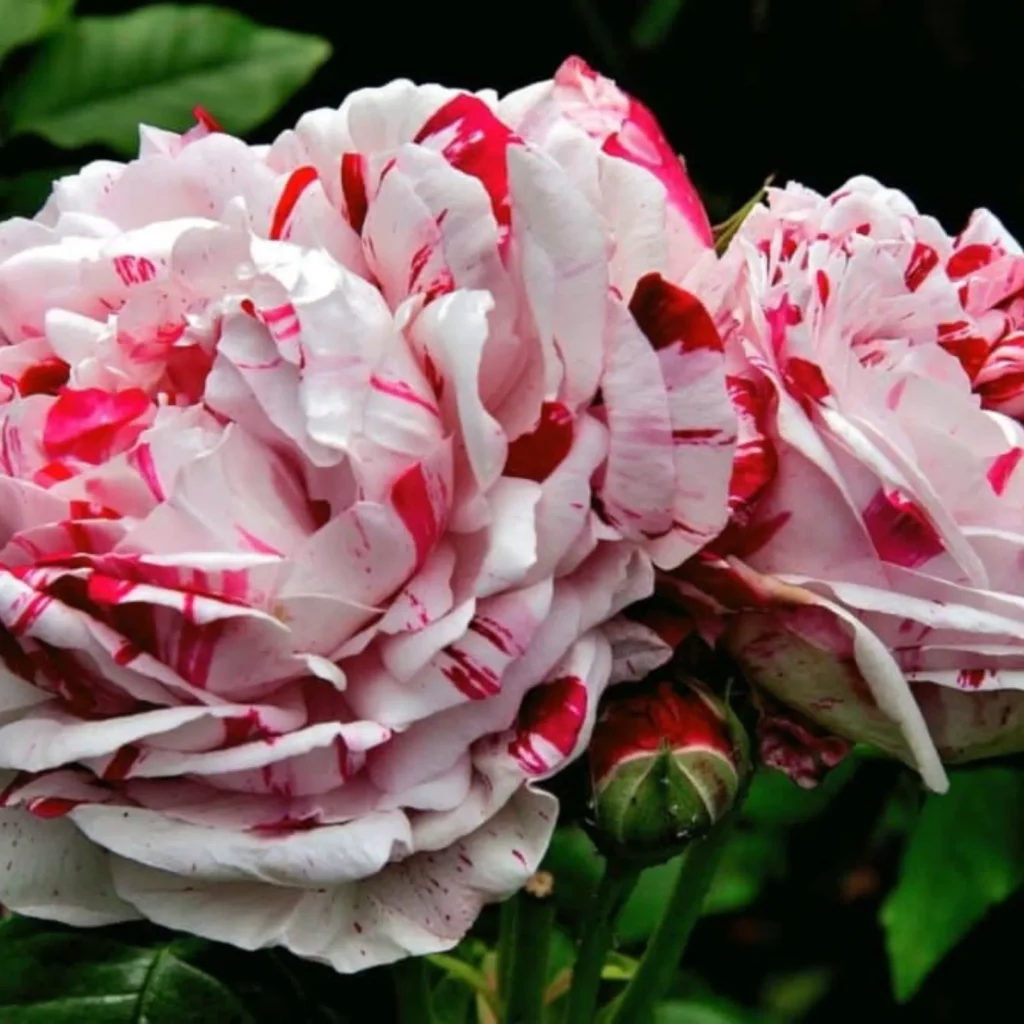
There are roses in my backyard. Old roses — given to me when I was a young woman, by someone I loved very much, and they have been growing in that soil for fifty years now. Thax buried Baxton under those roses. He knew that was the perfect place for him to rest. He just knew.
About two weeks later, a letter arrived in the mail. The young man was asking for money to repair the damage to his car. The damage caused by him hitting and killing my dog.
I made one phone call. To his mother. Her number was easy to find. I don’t remember what I said. I don’t think it matters.
A week later, flowers and a sympathy card with his name signed to it were delivered to my front door.
The first morning without him I came downstairs and his bowl was still on the floor and I stood there in the kitchen for a long time before I could move. The house took on that sound again — the one I know too well. The quiet of a place that has lost something it cannot get back.
That was the house Thax brought Gladys into, a few months later. That was the quiet she walked into.
A few days before Thax found her, he and I had a conversation. We were not getting another dog. We agreed. I said it. He said it. We meant it. The house felt too quiet, and we both knew that was true, but we were not going to try to fix that quiet with something we weren’t ready for. That was the agreement.
He smoked Chesterfields. Two or three a day — not a habit so much as a ritual. He was deliberate about those cigarettes. They meant something to him. He had run out, and he went out to get a pack. The city was empty enough that a drive felt like something, like reclaiming a little of the world. So he drove longer than he needed to.
I was on the porch when he pulled in. The light was going golden the way it does in New Orleans just before the sun gives up — that particular low, amber light that makes everything look a little more beautiful than it deserves. I had my Vieux Carré. I had my Lucky Strike. The ceiling fan was turning. I heard his car, and I wasn’t thinking much of anything.
Then I saw what he was carrying.
He had her in one hand — she was that small. A puppy, Boston Terrier by the look of her face and ears, though the rest of her was a question. Her eyes had just opened. Barely open. He had found her tied to a post outside a building on N. Villere Street, an old hall in the Seventh Ward that had been falling into itself for years. The street was empty. The building was empty. Nobody was coming back for anything tied to that post. He sat in his car for a brief moment, looking at her. Then he got out, untied her, brought her back to the car, and drove home.
He walked up to the porch. He held her out. He looked at the puppy, he looked me in the eyes, and he said:
“What choice did I have?”
And I started to cry.
I don’t know exactly why I started crying. Well — I do know. I was crying for Baxton. I was crying for the agreement we’d made and already knew, in our hearts, we couldn’t keep. And here was Thax, standing on our porch, holding something impossibly small that needed us.
What choice did I have?
Fifty-some years of marriage, and that man could still find the one sentence that was the exact truth of the thing.
We named her Gladys. I don’t remember which of us said it first — only that Thax had his slow smile on when it happened, the one that meant he’d already decided and was letting me think I was part of the conversation. It fit the moment he said it. The way a name does when it was already hers and you’re just the one who figured it out.
We bottle-fed her for weeks. Thax took the night shifts without being asked. He had those hands — the ones that could fix anything mechanical, that in his younger years had held engine parts — and he held that tiny dog through the night like it was the most natural thing he’d ever done.
She’s six now. A little gray coming in around her muzzle. She sleeps on the porch next to me most afternoons, close enough that I can feel her warmth against my ankle.
Thax has been gone three years. That’s a long time, and also it isn’t.
Some evenings, when the light goes golden the way it did that day and the ceiling fan turns and the street goes quiet, I look down at Gladys and I think about a man who went out for a pack of Chesterfields and came home with a question that was really an answer. And every time I think about it, I come back to the same thing.
We don’t choose our dogs. I know people think they do. They go to the shelter, they pick the one with the sad eyes, they drive home feeling like they made a decision. But I think the dog already knew. I think they find us — right when we need them, sometimes before we know we need them. Baxton found his way to us. Gladys found her way to us. Thax just happened to be behind the wheel that afternoon.
I think this is true of more than dogs. I think this is true of most of the things that have ever saved me.
I have thought about this for a long time, and I mean it with my whole heart: if I get to heaven and my dogs aren’t there, I’d rather go where they are. Though… I’m not sure I’m getting into heaven period. I’ve made a lot of mistakes.
Right now it is late afternoon and the heat is sitting down on this porch the way New Orleans heat does — not visiting, settling in. The humidity is up, which means the ceiling fan sounds like a playing card in bicycle spokes, that flutter that means summer has made itself at home. The gardenias are coming in heavy off the garden, that deep, sweet, almost reckless scent that means June has decided to stay a while. Gladys is warm against my ankle, her breathing slow and even, unbothered by any of it.
I don’t know what quiet is sitting in your house right now, cher. I don’t know what you’re missing. But I’ll tell you what I believe, and I believe it with everything I have: the things that save us have a way of finding us. Not always when we expect them. Not always in the shape we were looking for. Sometimes they show up tied to a post on N. Villere Street while your husband is out buying cigarettes. You just have to be on the porch.
She just shifted in her sleep. Her paws are moving, just barely. I like to think she’s chasing those squirrels she will never actually chase in her waking hours.
Let her dream it.
You come back now, cher. There’s always room for you on the porch.