My great-grandmother Marguerite arrived in New Orleans around 1960, when she was about eighty years old, and immediately began disapproving of things.
Well. That may be a slight understatement. She began disapproving of everything. Elvis Presley. Bikinis. American Catholicism. The heat. The food — with the sole exception of the beignets, which she ate with a fixed, dignified satisfaction that told you she was enjoying them enormously and had no intention of admitting it. She moved in with my grandparents on the other side of the duplex we shared with them, and she took to her disapproval of American life the way a fish takes to water. The way Americans drove. The way Americans talked. The general American conviction that louder was better.
She spoke no English. Had never spoken English. Gave every indication that she considered English a temporary condition that would eventually resolve itself if everyone just ignored it. English was just a fad. It would fade like a heat rash, and no one would remember that it had ever existed.
Disapproval had been Marguerite’s primary occupation since approximately 1895 — she was fifteen, France was busy arguing about everything, and she carried that tradition through the rest of her life, disagreeing with almost everything until the day she left this earth.
She had come to New Orleans because her daughter Hélène was here, and Hélène was the only person alive that Marguerite did not seem to fully disapprove of.
She disapproved of Thax. Strongly. She only once said so in front of him — one dinner, during our courtship, when she said something in French she should not have said, and Mémère ended it with five words I will carry until I die. Maman. Arrête maintenant. Ça suffit. Mama. Stop now. That’s enough. Whatever she thought after that about Thax and me and our relationship, she said with her eyes, which could narrate a novel the length of Gone With the Wind. She didn’t need her words.
So that was Marguerite. Born 1880. Died 1970. Ninety years old, give or take, and not one of them wasted on softness.
The funeral was handled with the precision you would expect from a family that included my mother. The food was correct. The flowers were correct. Father Thériault was there — our priest at St. Augustine, the man who had married us in that same church three years before. You could find him by the feel of the room: wherever it was a little warmer, wherever someone’s shoulders had come down an inch, wherever a person was looking slightly less lost than they had been a moment ago — that was where Father Thériault was. He walked in love — the kind that considers no one an inconvenience.
My grandparents Marcel and Hélène sat together near the window in the back of the room, the one overlooking the garden. Pépère held Mémère’s hand and kept it there all afternoon. Just that. Just his hand. He was a quiet, compact man who had built something from nothing in this city — an apothecary, a family, a life, and during Prohibition, one or two other enterprises that nobody ever needed to discuss in detail. He had become, over the decades, the kind of support that everyone leans on without knowing they’re doing it. Mémère sat beside him with the weight of the afternoon in her shoulders, not collapsed, not theatrical, just weighted the way you are when your mother is gone. Marguerite had been a difficult woman. Mémère had loved her anyway.
Yvette was there — Yvette, who has been filling rooms without trying to since before most people were born, and has no plans to stop. She had a glass of bourbon in her hand within approximately four minutes of walking through the door, wearing something in a color that had not received the memo about the occasion. She had known Marguerite for ten years. She was holding up fine.
Then there was Véronique, sitting on the floor with Celeste.
Véronique Châtelain was my daddy’s sister — in her late thirties in 1970, a riverboat mechanic. She had worked alongside men who communicated with great enthusiasm and used words that would give Miss Emily Post a heart attack, and Véronique had absorbed the habit completely. She had the biggest, most open heart of almost anyone I have ever known. She had been sitting on the floor with Celeste for twenty minutes, keeping my daughter entertained while the adults did the heavy work of the afternoon.
Now, before we go any further, I need to tell you something about the French language, as it was spoken in most of New Orleans back then.
Most families in this city carried French the way they carried everything else — in the blood, without thinking too hard about it. Louisiana Créole French. The French of the streets and the kitchen and the docks. Véronique grew up with it. So did my daddy, and every Châtelain I ever knew. It was just the language. Part of the air.
My mother was something else entirely. Mama spoke Parisian French — the kind her parents had brought over from France and refused to let go of. There is a difference between that and the French of the streets of New Orleans, and Adrielle Châtelain knew every inch of the differences.
Which means when my mother saw Véronique on the floor with Celeste, she could see exactly what was coming. The way you can see weather moving in off the river before anyone else notices the sky has changed.
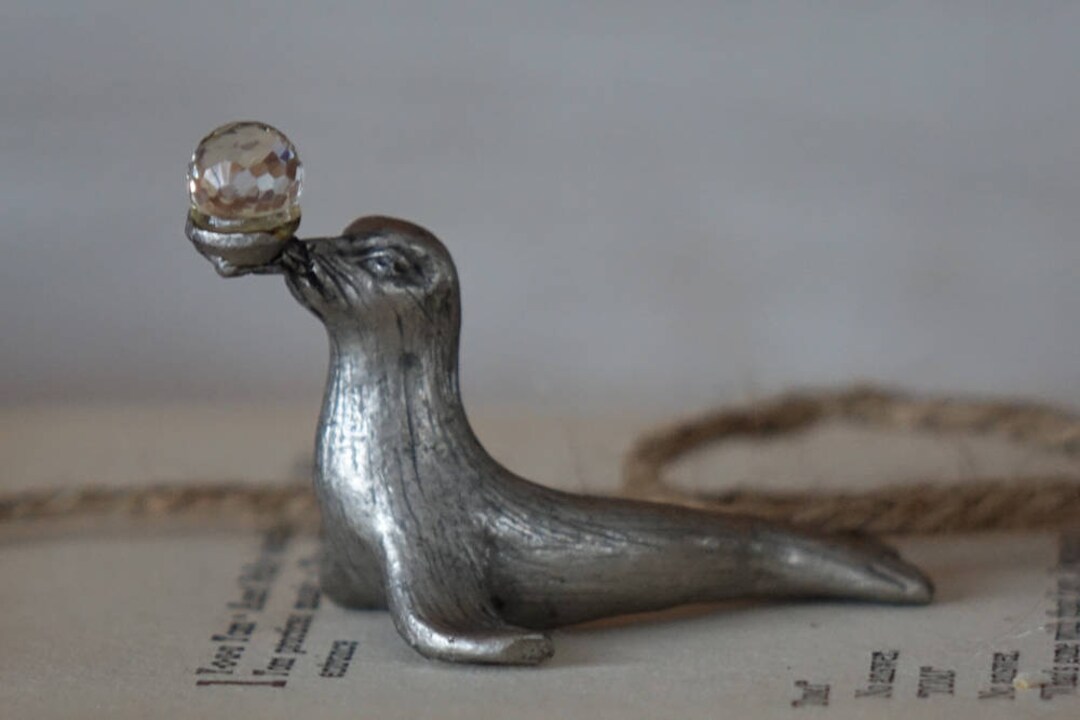
Véronique had taught Celeste just one word. The French word for seal. In Créole, that is phoque. P-H-O-Q-U-E. I am going to trust you to work out the pronunciation on your own. I have tremendous faith in you.
She did not say it the way my mother or grandparents would have said it. She said it in Créole. Which sounds, if anything, even more precisely like what you are already thinking.
Now. Most people in that room had grown up with Louisiana Créole French. They knew the word. They knew what Véronique had been teaching the baby. The question was never really what Véronique said. The question was what Celeste gave back. Because Celeste was eighteen months old and had not yet acquired French in any dialect. She heard a sound, and she did what all children do — she gave it back in the only language she had.
What came out was not the Créole word for seal.
By then Celeste was in Thax’s lap, watching the room with those enormous dark eyes she was already famous for — taking inventory, filing everything away, deciding what it all meant. Eighteen months old. Unbothered.
My daughter looked up, drew a breath, and announced it across the room with the excitement of someone who had just won fifty million dollars in the Powerball.
FUCK!
The room went quiet. I think the windows shook a little. They definitely felt the aftershock in Mobile.
Father Thériault’s face did something. He caught it and locked it down — in the time it takes to blink. Now — you need to understand that he was not a man built for that kind of containment. He had a sense of humor. A real one, the kind that lives close to the surface and does not appreciate being told to wait. What he did with that face in that room deserves more credit than it has ever received. He managed it completely. I never did tell him I saw it. To this day, I respect him enormously for it — and I respected him for a great many things.
Yvette was looking at the ceiling. Her glass of bourbon pressed lightly against her lips. Her eyes were very bright.
Mémère looked up from her chair. She looked at Celeste. Then she looked at Véronique. Then she looked back at Celeste.
And then Mémère — the woman who had silenced Marguerite with five words, the woman who never in her life said more than she meant, the woman who had been holding the weight of this entire afternoon on shoulders that did not bend — put her hand over her mouth, and her shoulders started shaking, and she laughed until she cried.
Not polite laughter. Not the careful, contained kind you do at other people’s events. The real kind. The kind that takes you over completely and doesn’t ask permission and doesn’t care what room you’re in or whose funeral it is.
Pépère looked at her. Then he looked at Celeste. Then something broke open on that quiet, compact face of his, and he laughed too — one hand still holding Mémère’s, both of them gone, undone entirely by one eighteen-month-old and whatever Véronique had been teaching her about marine mammals.
My mother’s face did not move. Not one muscle. In some ways, she was Marguerite’s granddaughter. Lord, what she said with those eyes that day. She stood in her correct clothes near her correct flowers on the correct table and her face did absolutely nothing at all — but her eyes were burning a hole clean through Véronique. She had seen this coming. You do not spend that many years as sister-in-law to Véronique Châtelain and be caught off guard by anything that comes out of her vicinity.
This was Véronique’s alibi, and it never changed: she had not been swearing, she had not been teaching Celeste naughty words, she had been telling the baby about a seal. The Créole word for seal, which is phoque, and Celeste was simply sharing her new word with the room. That is the complete account of what happened. Mama never believed a word of it. Not once.
Now.
Thax.
Thax had his slow smile on. The one that started somewhere deep before it made it to his face. His little girl — his perfect, extraordinary, completely correct little girl — had just opened her mouth in a room full of people and announced herself to the world. And Thax was not laughing. In that house, he was a man of genuine composure. He was absolutely not laughing.
But his shoulders.
His shoulders were doing something.
He lost it entirely on the drive home.
The family has never agreed on what Celeste actually said that afternoon. This is our official position, and we are holding it. Véronique was talking about a seal, and that is the end of it and has always been the end of it.
Here is what I know for certain: the man Marguerite had called ugly things in French when she thought he had no idea what she was saying — that man was holding his little girl in his lap. His beautiful heart. His pure soul. Well. Almost pure — the man wasn’t exactly Jesus Christ. And when that little girl opened her mouth and caused one of the most innocently hilarious disruptions any LaBellevie or Châtelain had ever witnessed in a domestic setting, that man looked at her like she had just done something wonderful.
Because to him, she had. She brought life to an event that was mourning death. Celeste took a room full of people mourning a very, very unpleasant woman and gave them the joy that Marguerite never gave anyone.
And the first person to laugh was Mémère.
That story has been told at every family dinner since 1970. The black dress. Thirty people being very polite in a small room. And then Celeste. It gets funnier every time. That’s what a good story does — it outlasts the grief that made it. What’s left is just a baby in her daddy’s lap who had no idea she’d made herself a legend before she could walk in a straight line.
Celeste is fifty-seven years old and is raising two children of her own now — well, from a distance. She was eighteen months old when this happened and cannot possibly remember a single moment of it.
She maintains, nonetheless, that she was saying phoque. And Celeste still pronounces it the same way she screamed it across the room in 1970.
Life is louder than grief. You can arrange the flowers and stand in the correct clothes and hold your face very still. And then an eighteen-month-old opens her mouth and gleefully shouts fuck across the room, and reminds every person in it that they are still alive. That is not an interruption. That is the point.
You are allowed to laugh in grief. The people you’ve lost don’t need your solemnity. They need you to still be alive. Tell the stories — especially the ones that use words you’re not supposed to say at a funeral reception.
You come back now, cher. I’m not finished yet.